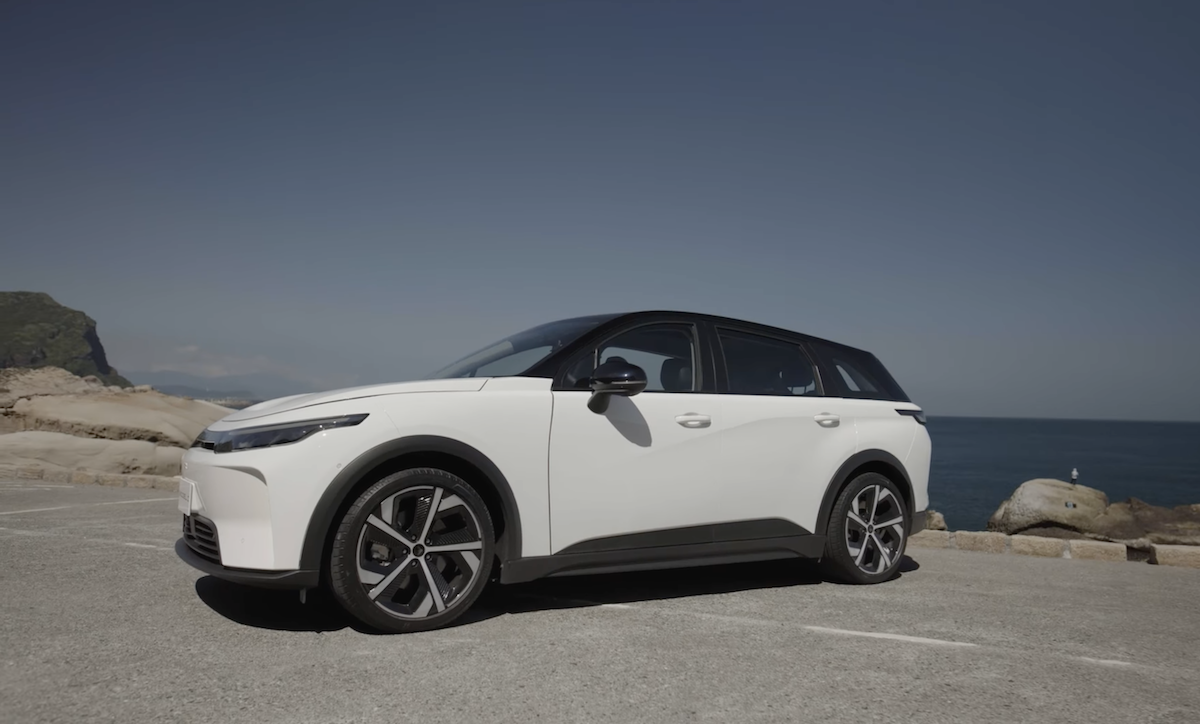
Taiwan's automotive industry was once called a sunset industry, not only because the automotive industry was intrinsically a labor-intensive, capital-intensive, and low-profit industry, but also because Taiwan's automotive industry was merely an OEM that had little technology and had to earn money by working hard. Now that the trend of electric vehicles is rising around the globe, Taiwan's ICT industry has a great opportunity to showcase what it has got. In the meantime, how do traditional carmakers transform as soon as possible to take control of their own future? The government is lending a helping hand, but the carmakers need to plan and communicate on their own initiative and reflect their needs upwards for a multiplier effect.
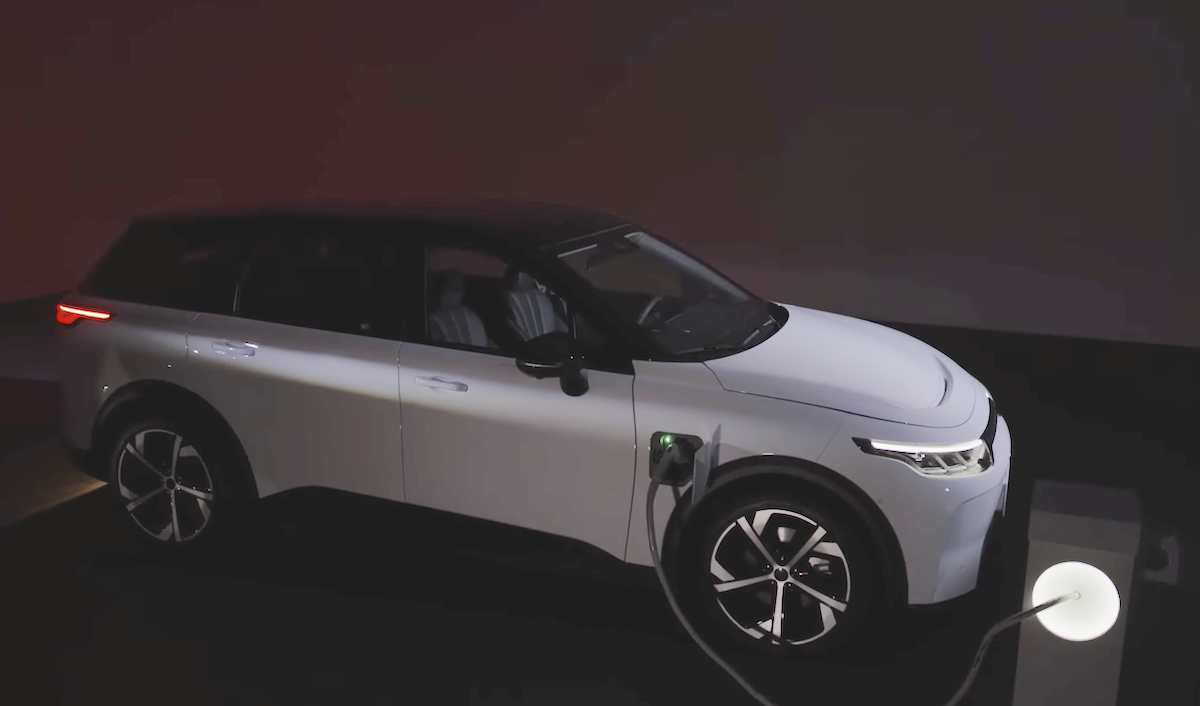
To achieve the 2040 zero-emission objective for new vehicles announced by the National Development Council at the end of this March, the Ministry of Economic Affairs has formulated three strategies to drive the development of the EV industry…
- Subsidize vehicle production localization. The goal is for two carmakers per year to produce EVs locally. A total of 57,800 domestic EVs will be produced.
- Subsidize the development of key components. Domestically manufactured key components will be used in the domestic production of EVs and sold back to the parent brand to boost the production revenue of automotive electronics. The production revenue of automotive electronics in Taiwan is expected to double to 600 billion NTD in 2025.
- Boost domestic demand and market. Government vehicles will be fully electrified by 2030 (full electrification for public buses by 2030 has been announced previously). There are also subsidies for electric taxis and electric pickups.
It is great news that the government is finally putting forward some concrete action plans to help develop the automotive industry. From the automotive industry's perspective, however, I still have some suggestions, in the hope that the industry of new automotive technologies will truly find a way out and catch up with the advanced countries in EV penetration rate.
- At present, most of the car assembly plants in Taiwan belong to Japanese brands, but unfortunately, the EV development of Japanese carmakers is relatively slow. Moreover, at the beginning of the EV era, major international carmakers are in urgent need of amortizing astronomical R&D expenses through mass production, and they must meet the demand in overseas markets by exporting finished vehicles. It is no doubt difficult to commission local OEMs in the form of CKD (complete knock-down) for assembly. Therefore, it is not feasible if Taiwan intends to replicate the model in the gasoline car era, where the whole vehicles are assembled in the form of OEM and the local parts are sold back to the parent plant. So now Taiwan only has two ways to go from here: create its own brand, or cooperate with foreign EV startups that has finite production resources (and partner up to generate revenue by speeding up mass production works). The domestic automotive market in Taiwan is so small that whichever way it chooses, eventually it will need to export finished vehicles or enter international supply chains of key components to make R&D investments worthwhile. Taiwan has a well-developed ICT industry, so it is not difficult to create its own EV brand, but competing in the global market requires the government to budget the launch of national-level marketing campaigns. Anything less than that will not truly help the automotive industry.
- When South Korea's automotive industry was just starting out (later than Taiwan's) decades ago, the government helped the industry buy out the engine technology and production rights of some advanced countries at a high price. This allowed South Korean carmakers to lay a solid technological foundation immediately and significantly close the gap with leading international automotive groups. Now batteries and autonomous driving are the two key technologies for new automotive technology that Taiwan is lagging in. I think the lithium battery technology should be skipped (there are already several large domestic companies developing lithium batteries in Taiwan), and that the government should give full support to the development of solid-state battery technology to speed up and overtake the current foreign startups. In terms of self-driving technology, the government should start strategic planning soon and join hands with the ARTC (Automotive Research & Testing Center), the ITRI (Industrial Technology Research Institute), and other units that have a strong track record of fundamental R&D to investigate and determine investment targets and directly invest in international self-driving technology companies that have potential but are in great need of working capital (there should be many such companies). After that, the ARTC and the ITRI will assist in transferring the technology to domestic carmakers (at present, Taiwan’s automotive and technology industries are far from capable of conducting R&D or technology transfer of L4 autonomous driving).
- The most important aspect of any government's EV policy is the promulgation of a decree that provides a zero-emission timeline for new vehicles. Zero emission by 2040 is only an objective in Taiwan now, while the predominant trend in the international automotive industry is to promulgate a "decree" that specifies zero emission by 2035. Taiwan is lagging both in timing and in the binding force of law. Of course, this goes back to the fact that Taiwan's carmakers are all OEMs. If the brand's parent plant does not apply CKD operations to EVs, then once the zero-emission law is enacted, won't it mean closedown to those carmakers? So, as I mentioned above, it is a "chicken and egg" problem! Only by creating its own brand can Taiwan's automotive industry control its own destiny in the EV era. Otherwise, the domestic market will not thrive, and then Taiwan will be a genuine lagging country in the EV era.
When the government has earmarked over 80 billion NTD for the development of the EV industry, putting a bunch of fish in the fish pond (replacing government vehicles with EVs) is a measure that is too slow to meet the pressing need, not to mention what to do when the fish pond has no more fish. Why not take the lead in navigating a boat and bringing fishing rods and nets to catch fish in the sea (international marketing of self-created brands, purchase of advanced technology, and cultivation of future technology)? There should be a lot more opportunities out there, right?